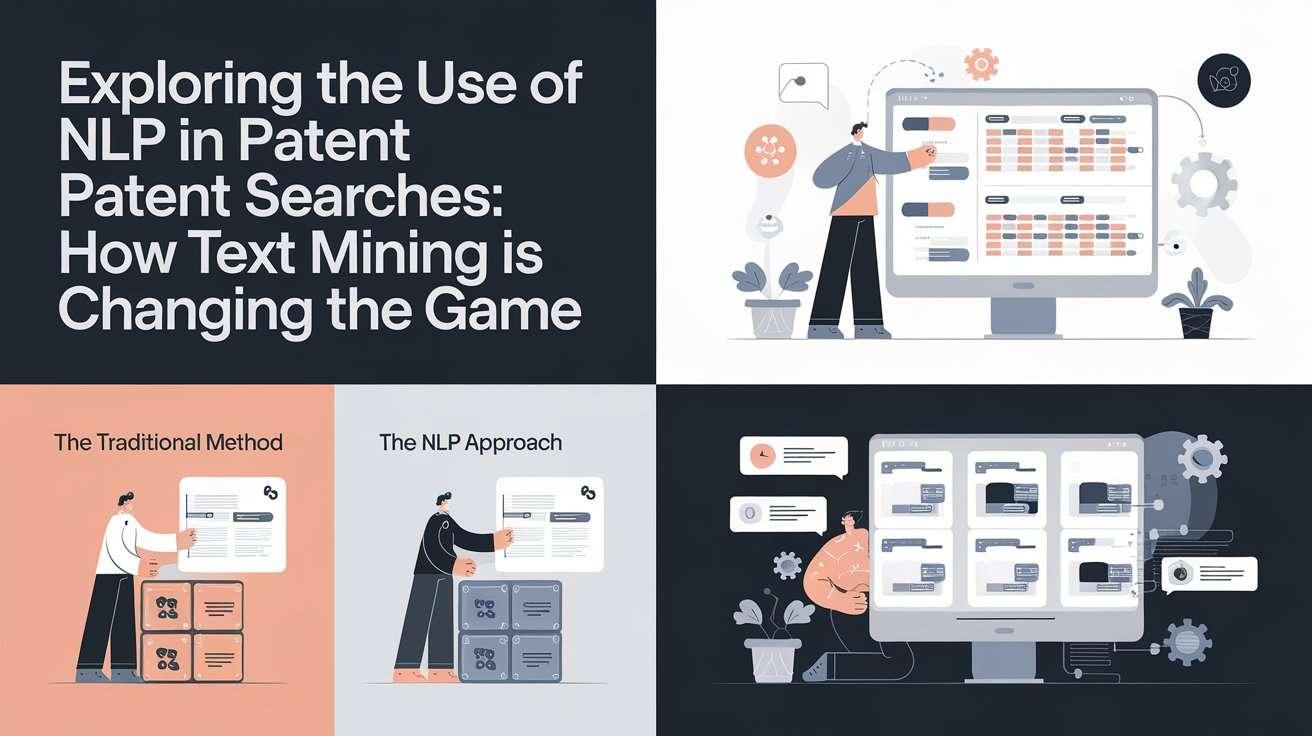
The world of intellectual property is a vast and complex domain, with patent searches at its heart.
However, the traditional methods of conducting patent searches, often reliant on manual labor and basic keyword matching, are being transformed by advancements in technology.
At the forefront of this transformation is natural language processing (NLP), a subfield of artificial intelligence (AI) that focuses on the interaction between computers and human language.
By leveraging NLP, the process of extracting meaningful insights from patent data is becoming faster, more accurate, and more efficient.
Patent searches involve identifying prior art that could impact the patentability of an invention. These searches are critical during the early stages of the patent application process.
The challenges of traditional patent searches include:
Volume of Data: Millions of patents mean a lot of data to sift through. Language Complexity: Patent documents use technical and legal language. Diverse Terminology: Terms vary for similar concepts.
How NLP is Revolutionizing Patent Searches
Natural language processing is changing the landscape of patent searches by automating and enhancing the analysis of textual data. Let’s explore some of the ways NLP tools are making a difference:
1. Advanced Text Mining for Insight Extraction
NLP algorithms excel at text mining, a process that involves extracting useful information from unstructured text data. Patent documents, with their standardized formats but highly variable content, are prime candidates for text mining applications. By analyzing the text of patent claims, descriptions, and classifications, NLP tools can identify patterns and relationships that might be missed by traditional search methods.
For example, NLP-based systems can:
Identify synonyms, antonyms, and related terms to ensure comprehensive search coverage. Extract key entities, such as inventors, assignees, and filing dates, for streamlined analysis. Categorize patents by technological domains using clustering algorithms.
2. Semantic Search Capabilities
One of the most significant advantages of NLP is its ability to perform semantic searches. Unlike keyword searches, which rely on exact matches, semantic searches consider the meaning behind the words. This allows researchers to uncover patents that may not explicitly use the same keywords but describe similar concepts.
For instance, if an inventor searches for patents related to “artificial intelligence for image recognition,” an NLP-powered search tool might also surface patents describing “machine learning algorithms for visual data analysis.” By understanding the context and intent, NLP eliminates gaps in traditional search methods.
3. Machine Translation for Multilingual Searches
Global patent databases, such as the European Patent Office (EPO) and the World Intellectual Property Organization (WIPO), contain documents in multiple languages. NLP-powered machine translation tools enable seamless cross-lingual searches by translating patents into the researcher’s preferred language. These tools use advanced models to preserve technical accuracy and context, ensuring that nothing is lost in translation.
4. Automated Classification and Clustering
Patent classification systems, such as the International Patent Classification (IPC) and the Cooperative Patent Classification (CPC), are used to organize patents into categories based on their technical content. Manually classifying patents can be tedious and error-prone, especially when dealing with large datasets.
Several NLP techniques and methodologies are instrumental in enhancing patent searches:
NLP algorithms can compare the text of a new invention disclosure with existing patents to identify prior art. These systems calculate similarity scores based on textual content, highlighting potential overlaps and areas of concern.
NLP tools automate this process by analyzing patent text and assigning appropriate classifications. Additionally, clustering algorithms group similar patents together, enabling researchers to identify trends and overlaps in specific technological areas quickly.
Named Entity Recognition (NER): Identifies entities such as names, dates, and organizations within patent documents, enabling more organized data extraction.
Topic Modeling: Groups patents based on underlying themes or topics, simplifying the analysis of large datasets.
Real-World Applications of NLP in Patent Searches
Prior Art Analysis and Similarity Detection
1. LegalTech Solutions
Several companies and platforms now integrate NLP into their patent search tools. For example, tools like PatSeer, LexisNexis TotalPatent, and Derwent Innovation use NLP to provide advanced search functionalities, including semantic search, automated classification, and prior art analysis.
2. Competitive Intelligence
Businesses use NLP tools to monitor competitors’ patent filings, identifying emerging trends and potential threats. By analyzing patent landscapes, organizations can make strategic decisions about research and development investments.
3. Innovation Management
NLP aids in the identification of white spaces—areas with limited patent activity—guiding organizations to focus their innovation efforts where opportunities are abundant.
4. Patent Prosecution and Litigation
NLP tools assist attorneys in drafting patent claims, preparing responses to office actions, and analyzing prior art for litigation purposes. The automation of these tasks reduces costs and improves efficiency.
While NLP offers numerous benefits, it is not without challenges:
Quality of Data: Poorly scanned documents or inconsistent formatting can hinder the effectiveness of NLP algorithms.
Complex Language Structures: Legal and technical jargon in patent documents requires advanced models for accurate interpretation.
Computational Costs: Processing large datasets with NLP tools can be resource-intensive, necessitating robust infrastructure.
Evolving Standards: Patent classification systems and terminologies evolve over time, requiring regular updates to NLP models.
Bias in Algorithms: NLP systems can inherit biases from their training data, leading to inaccuracies in search results.
Natural language processing is revolutionizing the way patent searches are conducted. By automating tedious tasks, enhancing accuracy, and uncovering deeper insights, NLP tools are empowering inventors, businesses, and legal professionals to navigate the complex world of intellectual property with greater confidence.
As the technology continues to evolve, the possibilities for innovation in patent searches are virtually limitless. Embracing NLP is not just a trend but a necessity for staying competitive in an increasingly data-driven world.
Whether you are an inventor seeking to protect your creation or a company aiming to stay ahead of the competition, leveraging NLP for patent searches is a game-changer you cannot afford to ignore.
Leave a comment
Share your thoughts, questions, or feedback with us.
Empowering Innovation: IP Brigade specialize in creating, managing, and monetizing intellectual property to fuel your success.

QUICK LINKS
Home About Us Our Services Blog FAQ Contact Us

CONTACT US
+1-267-855-3990

Working Hours
Mon-Sat: 9:00 AM-6:00 PM

US Address
1401 E Bristol St Office #2 - V95, Philadelphia, PA 19124

India Address
Plot No. 15, Ground Floor, Sai Enclave, Sector 23, Dwarka, New Delhi, Delhi, 110077

Copyright © 2024 IP BRIGADE INC. All Rights Reserved.
info@ipbrigade.com